+1 Speed Obby Clicker
- 4.8
- Rating
- 1.00M
- Installs
- Free
- Price

 Analysis by App-foxy
I approached +1 Speed Obby Clicker expecting a quick simulation game built around movement, short attempts, and the familiar satisfaction of getting a little faster. That is broadly what it delivers: a parkour-focused experience where speed matters, mistakes interrupt your run, and pets add another layer to the progression. It is free to play, aimed at Teen players, and developed by Tori Fun Game.
What makes it worth discussing is not simply the idea of an obby. There are plenty of obstacle games on mobile, and many of them become repetitive after the first few sessions. Here, the appeal comes from combining the physical challenge of navigating platforms with the longer-term motivation of improving speed. I found that combination more interesting than a basic obstacle course, especially when I treated each attempt as practice rather than expecting to clear everything immediately.
The game has a 4.8 average from around 9.1 thousand ratings, and it has passed 1 million installs. Those figures suggest that the format has found an audience, but they do not remove the need to understand what kind of player will enjoy it. In my experience, this is best suited to someone who likes quick retries, visible progression, and a game that can be picked up for a few minutes at a time. It is less suitable if you want a deep simulation, a story-driven adventure, or a relaxed game with no pressure from timing and movement.
You May Also Like

 Blood Strike: 2.5 Anniversary
Blood Strike’s Loadouts Turn Every Drop Into a Tactical Gamble
A close look at Blood Strike’s custom loadouts: how fast access to signature weapons reshapes its battle royale rhythm, rewards preparation, and narrows the gap between fights.

 Pandora - Music & Podcasts
Pandora’s Music Is Easy to Start, but Harder to Recover
Pandora’s strength is its low-effort path from a seed to a station. Its weak spot is how much confidence it asks you to place in connection, setup, and quiet recovery.

 8 Ball Pool
 Is Built on Rivalries, Rematches, and Routine
A close look at the rivalries, rematches, shared routines, and unanswered safety questions that turn a quick pool match into a persistent mobile community.

 Samsung Music
’s Quiet Strength Is Playing What You Already Own
Its reach comes less from spectacle than from dependable access to a personal library. That simplicity is both the app’s strongest retention engine and its ceiling.

 AccuWeather: Weather Radar
AccuWeather Review: A Quick, Clear Forecast for Everyday Decisions
For everyday plans, the best forecast is the one you can understand quickly. AccuWeather makes rain timing, radar, and local conditions easy to act on, with a few trade-offs.

 Hill Climb Racing
Why Hill Climb Racing Still Turns Crashes Into One More Run
A tiny car, a bumpy hill and one more upgrade: Hill Climb Racing keeps resurfacing because its simple chaos makes every near-miss feel personal.
More From Our News Desk



How the speed-focused design feels in practice
The central promise is easy to understand: move through an obby, build speed, and use that improvement to handle the course more confidently. The speed element changes how I read each section. A platform is not only something to reach; it is also part of a route that needs rhythm. Going faster can make progress feel exciting, but it also reduces the time available to correct a poor jump or a late turn.
That trade-off is the most important thing to understand before installing it. A higher speed is not automatically better in every situation. When I was learning a difficult section, slowing down mentally—even if the game encouraged faster movement—helped me identify where I was losing control. Once the route felt familiar, the same section became more enjoyable at a quicker pace. This makes the game feel more like a repeated skill exercise than a simple clicker with decorative parkour.
The “clicker” side of the concept gives the game a reason to keep going after a successful run. Instead of treating completion as the only reward, the design encourages gradual improvement. That works well for players who enjoy watching a character become more capable over several short sessions. It also means the game can feel less satisfying to anyone who prefers a clear ending after each level.
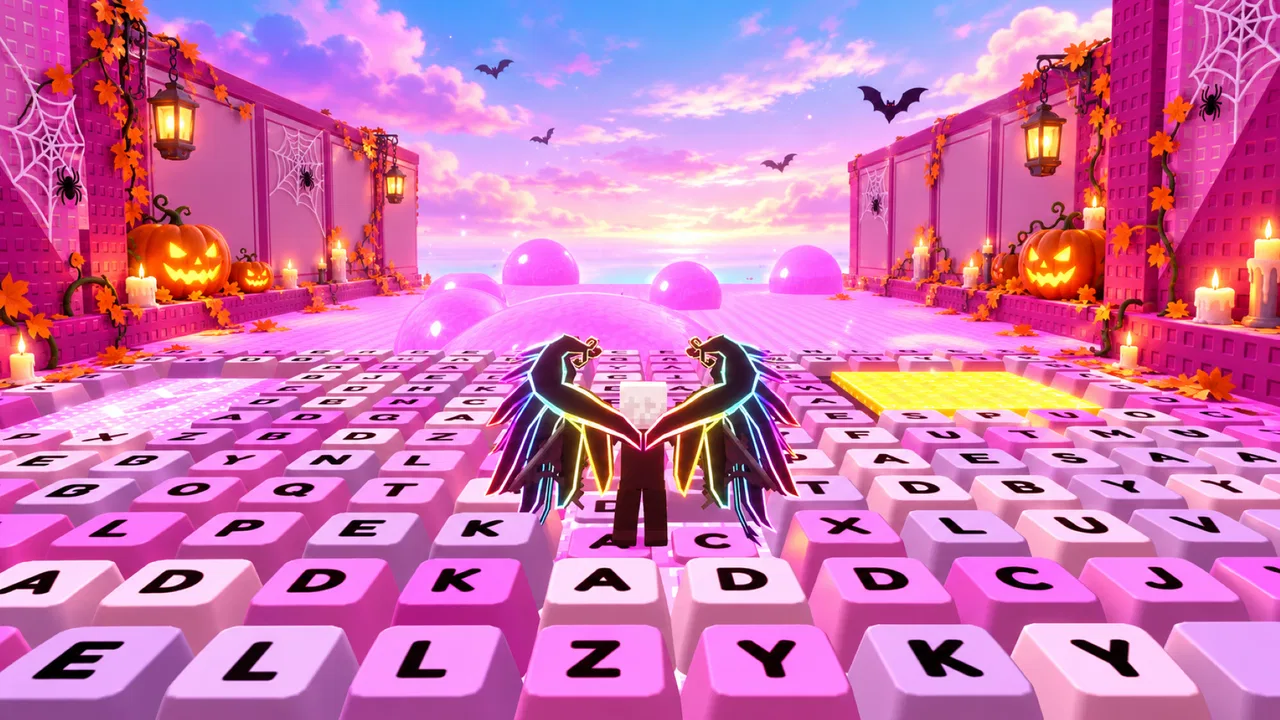
The keyboard escape theme adds a playful layer to the presentation and helps distinguish the game from a plain platform course. I would not approach it expecting the complexity of a full PC obstacle game, though. Its strongest quality is accessibility: the basic goal is immediately readable, and the loop does not require a long tutorial to understand.
Why perceived speed matters more than raw speed
In a game like this, speed is partly a feeling created by motion, spacing, and the timing of obstacles. Even without treating the game as a technical benchmark, I noticed that a faster run feels rewarding only when I can still predict the next landing. If the pace gets ahead of my judgment, the experience changes from exciting to frustrating.
My practical advice is to use early attempts to learn the course rather than chasing the best possible pace. Watch for the point where a jump begins, note which turns require a correction, and then increase your speed once the route is familiar. This approach is especially useful on a phone, where a small finger movement can have a bigger effect than expected.
Pets fit naturally into this loop because they give progression a more visible identity. They are not just a menu item to collect; they help make improvement feel personal. For players who enjoy collecting companions and checking how they affect a run, that can keep the game engaging after the first novelty fades. Players who dislike upgrade-oriented loops may see the pets as extra clutter around a simple obstacle game.
What happens during longer or busier sessions
The most demanding moments are likely to be the ones where movement, rapid decisions, and progression choices happen close together. A short attempt can feel light, but repeated retries create a different workload: the player is constantly watching the route, reacting to obstacles, and deciding whether to try again immediately or spend time improving the character or pet setup.
I found that this makes the game particularly suitable for breaks. A few attempts fit comfortably into a short wait, and the restart-oriented structure means I do not need to remember a complicated story or rebuild a large plan after leaving. That is a real advantage over heavier simulation games that need longer sessions before their systems become meaningful.
There is also a trade-off during extended play. Repeating the same type of course can make the experience feel mentally busier than its simple presentation suggests. If I played for too long without changing my goal, the loop became less about discovery and more about correcting tiny mistakes. The best way to avoid that is to give each session a purpose: learn a troublesome section, improve a run, or work toward a pet-related progression target.
That session-based approach is one of the more useful ways to play. Instead of tapping through attempts automatically, I recommend stopping after a clear improvement. It prevents the game from turning into a frustrating cycle where every failure feels identical. It also makes the speed progression easier to appreciate because each session has a visible point of comparison.
Recovery after a failed run
Recovery is important in any obby because failure is part of the design. Here, the short-attempt structure makes mistakes easier to accept than they would be in a long mission. I can fail a jump, understand what went wrong, and try again without feeling that a large amount of time has been wasted.
The best recovery habit is to change one thing at a time. If a jump fails, I would not immediately alter speed, route, and timing together. I would first repeat the approach with a slightly different movement, then decide whether the problem was pace or positioning. This sounds simple, but it turns repeated failure into useful practice instead of random retrying.
Players should also be prepared for the possibility that progress may feel uneven. A small speed improvement can make familiar sections comfortable while making a new obstacle harder to control. That is not necessarily a flaw; it is a natural consequence of a game where movement performance and progression are connected. Still, anyone looking for a consistently calm experience may prefer a slower simulation with less emphasis on precision.
Stability, updates, and everyday use
The current version is 0.17, which places the game in a stage where players should expect the experience to continue evolving rather than feeling like a finished, unchanging product. I see that as a reason to keep expectations practical. A smaller version number does not automatically mean poor quality, but it does make it sensible to allow for changes in balance, presentation, or how progression feels over time.
In normal use, the most important reliability question is whether the game lets me return to its core loop quickly. A speed obby benefits from a simple path from opening the game to making another attempt. If menus, rewards, or collection screens become more prominent than the course itself, the experience loses some of its immediacy. The game works best when those supporting systems remain in service of the run rather than becoming the main task.
I would choose it for a casual daily routine such as playing during a commute break, waiting for an appointment, or taking a short pause between larger tasks. The free entry point makes that decision easy, although in-app purchases range from $1.99 to $4.99 per item. I would start without spending anything and first decide whether the movement loop itself is enjoyable. Purchases make more sense only for someone who already likes the repeated progression and wants to support or extend that style of play.
Because the content rating is Teen, parents and younger players should pay attention to the age guidance rather than assuming that a colorful parkour game is automatically intended for children. The rating is part of deciding whether it fits a particular family device, especially when the game includes progression and optional purchases.
Device demands and practical constraints
The minimum operating-system requirement is Android 7.1, so the game is accessible to a broad range of Android devices that are still running that software level. That does not guarantee identical performance across every phone. Age, available storage, background activity, and the condition of the device can all affect how comfortable a fast movement game feels.
For a game built around timing, responsiveness matters more than visual ambition. A phone that handles ordinary apps well may still feel less comfortable if touch input is inconsistent or if other apps are competing for resources. Before blaming the course for missed jumps, I would close unnecessary background apps, avoid playing while the device is struggling with heat, and make sure the screen is clean enough for reliable swipes or taps.
Battery use is another practical consideration, although I would judge it by the length of the session rather than assuming every device behaves the same way. Short play periods should fit the game’s design naturally. If I wanted to play for a long stretch, I would lower expectations about battery efficiency and pay attention to warmth, because repeated movement attempts can encourage longer sessions than intended.
Older hardware may also change the perceived difficulty. Even a brief hesitation during a jump can feel like a control problem, while a stable frame response makes the same section more manageable. If your phone is near the minimum software requirement or already struggles with other 3D games, this may not be the best choice for precise play. A simpler two-dimensional alternative could be more comfortable, even if it lacks the speed-and-pet combination.
Who will get the most from it
I would recommend this game to players who enjoy obstacle courses but want a progression loop around them. It is a good fit for someone who likes trying the same section repeatedly, learning through mistakes, and seeing speed become part of the challenge. The pet system is an additional reason to stay involved if collecting companions is more motivating to you than simply reaching the end of a course.
It also suits people who prefer games that explain themselves through play. The basic objective is direct, and the short-run format makes it easy to experiment without committing to a lengthy campaign. Someone who has only a few minutes at a time can still make progress, provided they are comfortable with the possibility that improvement may require several attempts.
I would skip it if your priority is a realistic simulation. Although it belongs to the simulation category, its focus is clearly arcade-like movement and progression rather than managing a believable business, vehicle, household, or world. I would also look elsewhere if you want deep customization, a narrative, or a broad variety of unrelated activities. The appeal depends on whether speed-running an obby sounds enjoyable to you in the first place.
How it compares with familiar alternatives
Compared with a traditional obby, this game puts more weight on long-term speed improvement and pets. A standard obstacle course may be better if you want a pure test of route knowledge and movement, without progression systems influencing the experience. On the other hand, the added loop here gives me a reason to return after I already understand the basic course.
Compared with a conventional clicker, it asks for more attention. A passive or mostly automatic clicker can be played while watching something else, whereas this game rewards active timing and visual focus. That makes it more engaging when I want to play rather than simply check numbers, but less convenient when I want a background activity.
Compared with a larger simulation game, it is much easier to start and stop. The cost of that convenience is depth. You are choosing quick parkour attempts and speed progression instead of a world with many independent systems. That is not a weakness for the right audience; it is simply the defining trade-off.
My performance verdict
After looking at the game as both a speed challenge and a casual simulation, I think its strongest point is the connection between movement skill and progression. The speed focus gives each obstacle more meaning, while pets provide a reason to keep returning. The design is most enjoyable when I play in short, purposeful sessions and treat failed attempts as information.
Its limitations are equally clear. The loop may become repetitive for players who need constant changes of activity, and faster movement can make control feel less forgiving. Device responsiveness matters, particularly on older phones, and optional purchases mean that players should decide early whether the free experience already provides enough motivation. I would not spend money before confirming that the core obby play is satisfying.
Overall, I see +1 Speed Obby Clicker as a focused, approachable choice for fans of quick parkour games who want more than a one-time course. It is not trying to replace a deep simulation or a full adventure, and it should not be judged by those standards. For the right player, the best part is the small, repeatable improvement from one run to the next: learning a turn, controlling a faster approach, and recovering quickly after a mistake. That is enough to make it a worthwhile free download, as long as you enjoy active retries and do not expect endless variety.
FAQs for +1 Speed Obby Clicker
01What is +1 Speed Obby Clicker?
+1 Speed Obby Clicker is a casual obstacle-course game that combines clicker progression with Roblox-style obby challenges. Players generally tap or click to increase their speed, then use that advantage to move through courses, avoid obstacles, reach checkpoints, and unlock further progress. The appeal comes from the simple controls, quick rounds, and gradual feeling of becoming faster and more capable.
02How do you play +1 Speed Obby Clicker?
The main gameplay loop is easy to understand: tap or click to build speed, then guide your character through an obstacle course. Timing and movement still matter, because running faster does not automatically prevent falls or collisions. Depending on the version and available features, players may also collect rewards, upgrade statistics, unlock new areas, or compete for better completion times.
03Is +1 Speed Obby Clicker free to download and play?
The game is typically available as a free download, allowing players to try the core clicker and obby gameplay without paying upfront. However, free games may include optional purchases, advertisements, premium boosts, cosmetic items, or other paid advantages. Before downloading, it is worth checking the official store listing for the current pricing, age rating, in-app purchase details, and supported device requirements.
04Does +1 Speed Obby Clicker require an internet connection?
An internet connection may be necessary, especially if the game includes online leaderboards, cloud saving, advertisements, account features, or content delivered from a server. Some basic sections might load or remain playable offline, but this can vary by platform and version. For the most reliable experience, install updates while connected to Wi-Fi and review the app’s permissions and store description.
05Is +1 Speed Obby Clicker suitable for children?
The simple controls and colorful obstacle-course format can make +1 Speed Obby Clicker appealing to younger players, but parents should still review the game before allowing regular use. Check its age rating, advertising approach, chat or social features, and in-app purchase options. If children play on a shared device, parental controls and purchase restrictions are recommended to avoid accidental spending or unwanted interactions.
Pros
- Simple one-tap controls are easy for players of all ages.
- Short obstacle courses make it suitable for quick gaming sessions.
- Speed-focused gameplay creates a satisfying sense of progression.
- Bright visuals make the course easy to follow on small screens.
- The clicker format offers a straightforward
- low-learning-curve experience.
Cons
- Gameplay can become repetitive once the obstacle patterns feel familiar.
- Frequent tapping may be uncomfortable during longer play sessions.
- Progress may feel slow without upgrades or bonuses.
- The game may offer limited depth for experienced obby players.
- Ads or in-app purchases could interrupt the otherwise quick gameplay.

+1 Speed Obby Clicker
Gallery